
Materials
Particle Size in Calcium Carbonate: What Buyers Should Actually Compare
Particle size is one of the first specifications buyers encounter when comparing calcium carbonate grades. It is also one of the easiest to misinterpret. This article explains why measurement method, particle-size distribution and the broader technical profile matter when evaluating grades.
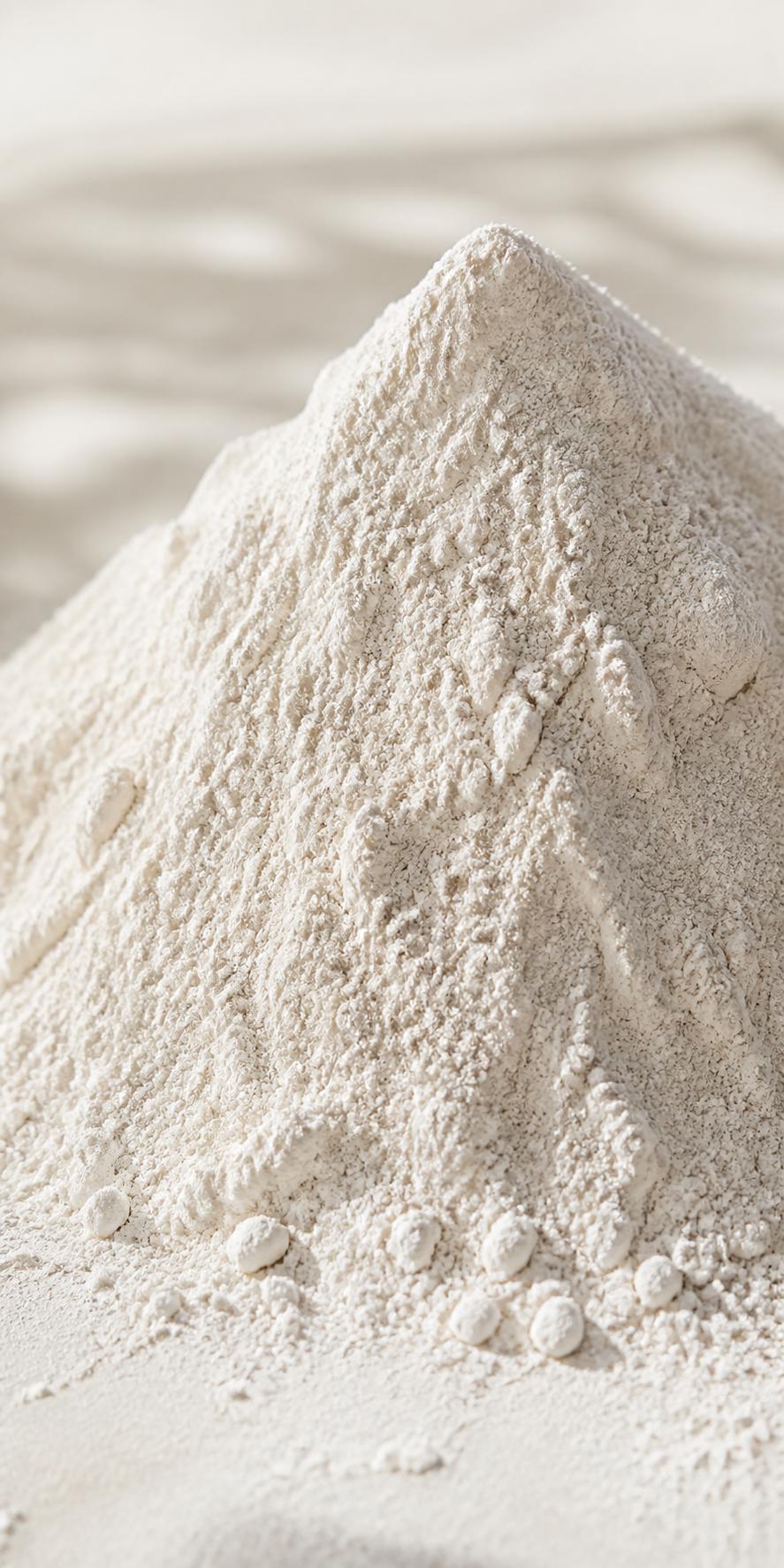
Particle size is one of the first specifications buyers encounter when comparing calcium carbonate grades. It is also one of the easiest to misinterpret.
A grade described by a mean particle size of 1.5 µm may appear straightforward to compare with another grade described as 2 µm or 3 µm. In practice, that single number represents only part of the material’s particle-size profile. The measurement method, particle-size distribution, coarse fraction and other physical characteristics all contribute to understanding whether two grades are genuinely comparable.
For buyers evaluating calcium carbonate for coatings, plastics and other industrial applications, the useful question is therefore not simply ‘Which grade is finer?’ It is ‘Which technical profile is appropriate for the application and process?’
Key takeaways
Particle size should not be evaluated in isolation. Buyers should establish which measurement method produced the reported value, examine the broader particle-size distribution and coarse fraction, and compare other relevant properties alongside it. Surface treatment and application requirements can also distinguish grades that appear similar from a single particle-size figure.
Most importantly, values obtained using different particle-size measurement systems should not automatically be treated as directly interchangeable.
Why particle size matters
Ground calcium carbonate is available across a range of particle-size profiles. Buyers encounter particle-size information because it helps characterize the physical form of a grade and differentiate one grade from another.
But ‘particle size’ is not a single universal property. Technical data can describe calcium carbonate using several measurements, including mean particle size, a top-cut value, the proportion of particles below a defined size and sieve residue. Each describes a different aspect of the material.
That distinction becomes important when comparing grades from different sources—or even different measurements of the same material.
A single particle-size number does not tell the whole story
| Measurement | Reported result |
|---|---|
| Mean particle size — Sympatec HELOS | 1.5 µm |
| Mean particle size — Malvern 2000 | 2.2 µm |
| Particles below 2 µm — Sympatec HELOS | 64% |
| Particles below 2 µm — Malvern 2000 | 45% |
These measurements can describe the same source material rather than four different grades. They illustrate why a particle-size value should be read together with its measurement method and definition. Neither measurement system should be regarded as inherently superior on the basis of these figures, and their results should not automatically be treated as interchangeable.
Look at the particle-size distribution
A mean or median value compresses a distribution into one number. Two grades can have similar headline particle-size values while differing in their fine fraction or upper-end distribution. A mean and a median are also different descriptors; confirm which is being reported.
Fine fraction, top cut and residue
- Particles below a defined size describe a portion of the distribution. Read the percentage with its threshold, measurement basis and method.
- A d97 / top-cut value helps describe the upper end of the measured distribution. Check the stated definition and method rather than assuming it describes an absolute maximum particle size.
- Sieve residue describes the fraction retained under a specified sieve test. The aperture and test procedure belong alongside the reported result.
Particle size should be read with other properties
Whiteness and brightness, moisture, bulk-density-related values, oil absorption and chemical composition or purity add context to the particle-size profile. They describe different aspects of the material and help buyers frame the technical comparison.
Not every parameter is equally important in every application. Compare definitions and test conditions, then identify which properties matter to the intended formulation, handling and process requirements. Whiteness and brightness, for example, should not be assumed to be the same measurement simply because both describe optical characteristics.
Surface treatment is a separate selection variable
Uncoated calcium carbonate and coated calcium carbonate represent different selection choices. A coated grade has a surface treatment that must be considered alongside the underlying mineral’s particle-size profile and other specifications.
Two materials with similar particle-size values may therefore be materially different product choices if one is surface treated. Confirm the treatment status and the intended application rather than using particle size as a proxy for equivalence.
Application context matters
Calcium carbonate has uses in paints and coatings, putties and adhesives, plastics and rubbers, including polyolefins, PVC-related applications and polyesters. These application contexts do not mean that every grade is interchangeable across every formulation or process.
Instead of asking ‘What is your finest calcium carbonate?’, ask ‘Which calcium carbonate specification matches the requirements of this application?’ That shifts the comparison toward the properties relevant to the intended use.
What should buyers compare?
| Parameter | What to establish |
|---|---|
| Particle-size value | Identify the reported parameter, such as mean or median, and its units. |
| Measurement method | Keep the instrument, method and measurement definition with the result. |
| Particle-size distribution | Examine the distribution beyond the headline value, including the fine fraction. |
| Top cut / coarse fraction | Compare upper-end distribution and sieve residue using their stated definitions. |
| Surface treatment | Establish whether the grade is coated or uncoated and whether this suits the intended use. |
| Whiteness / brightness | Compare the relevant optical measurement and test method. |
| Chemical composition | Review composition and purity against the application’s requirements. |
| Oil absorption | Read the value with its test method and formulation context. |
| Moisture | Check the stated moisture basis and its relevance to the process. |
| Application suitability | Confirm the overall profile against the intended formulation and process. |
Questions to ask when comparing calcium carbonate grades
- Are the particle-size figures describing the same parameter?
- Were they obtained using comparable measurement methods?
- What does the broader particle-size distribution look like?
- Is either material surface treated?
- Which additional specifications matter to this application and process?
- Are the reported figures specifications, typical values or another form of technical data?
These questions help distinguish a useful comparison from an apparent match. A typical value should not silently become a guaranteed specification, and an application statement should be assessed in the context of the actual requirement.
Compare the technical profile, not just the micron figure
The objective is not necessarily to obtain the smallest number on a technical data sheet. It is to identify a calcium carbonate whose overall technical profile fits the application and process requirements.